Engine Knocking or Seized? What That Noise Means and When to Stop Fixing
A knock from under the hood is one of the sounds drivers dread most, and for good reason. Some engine noises are cheap to sort out. A deep, rhythmic knock that speeds up as you rev usually isn’t. And an engine that won’t turn over at all may already have seized. Here’s how to tell the common noises apart, what to do in the first few minutes, and how to decide whether the car is still worth fixing.
Knock, Ping or Tick? Telling the Noises Apart
Drivers use “knocking” for almost any noise from the engine, but mechanics separate them into a few very different problems:
- Pinging (spark knock). A light, metallic rattle, like marbles in a can, that shows up when you accelerate hard or climb a hill. It means fuel in a cylinder is igniting at the wrong moment. Common causes are fuel with a lower octane rating than your owner’s manual calls for, carbon build-up inside the engine, an engine running hot, the wrong spark plugs, or a faulty knock sensor. Caught early, this is usually one of the more fixable noises.
- Lifter or valve tick. A lighter, quick tapping from the top of the engine that often follows engine speed. It can come from low oil, dirty oil or worn valvetrain parts, and sometimes fades as the engine warms up. It deserves attention, but it isn’t always a sign of major damage.
- Rod knock. A deep, heavy knock from lower down in the engine that gets faster as the revs rise and is often loudest under load or right as you let off the gas. It usually means the bearings on a connecting rod have worn, very often because the engine ran low on oil or oil pressure. This is the serious one.
Telling these apart by ear takes practice, and noises travel through an engine in confusing ways. Treat this as a guide to how worried to be, then have a mechanic confirm it. A shop can listen with a stethoscope, check oil pressure and read any stored codes. (If your check engine light is on as well, our guide to a check engine light that won’t turn off covers what that can mean.)
What to Do Right Away
- Pull over and shut it off if the knock is deep and loud, or if the oil pressure warning light comes on. Every minute of running with a failing bearing makes the damage worse.
- Check the oil once you’re safely stopped and the engine has had a few minutes to settle. If the dipstick shows little or no oil, that’s a strong clue. Topping up with the oil your manual specifies may quiet a tick, but it won’t undo bearing damage that has already happened.
- Look for other warning signs: a temperature gauge in the red, steam, or smoke from the exhaust. Our guides to why a car overheats and what exhaust smoke colours mean can help narrow things down.
- Don’t drive it to “see if it goes away.” A worn rod bearing can fail completely, and a broken connecting rod can punch a hole through the engine block, which mechanics call “throwing a rod.” At that point the engine is finished. Have the car towed to the shop instead.
What a Seized Engine Is, and How It Happens
An engine has seized when its internal parts can no longer turn. You turn the key and get a click or a single heavy clunk, or the starter strains, but the engine doesn’t crank over the way it normally would. The most common causes are:
- Oil starvation. Without oil, metal parts rub directly against each other, overheat and can fuse together. A knock that was ignored often ends here.
- Severe overheating. Running an engine very hot can warp parts and damage the surfaces that are supposed to slide past each other.
- Hydrolock. Driving through deep water can pull water into the engine through the air intake. Water doesn’t compress the way air and fuel do, so it can stop the engine suddenly and bend internal parts. See our post on flood and fire damaged cars if water was involved.
- Long storage. A car that has sat for a long time, especially somewhere damp, can develop rust inside the cylinders that locks the engine in place.
Not every car that won’t crank has a seized engine. A weak battery, a bad connection or a failed starter can look similar, which is why a quick check is worth it before you assume the worst. A mechanic can usually tell within minutes by trying to turn the engine over by hand. If it won’t move, it’s seized. Our post on why a car won’t start in the cold covers the simpler causes.
Your Repair Options
What’s realistic depends on which noise you have and how long it went on:
- Pinging: often solved by switching to the correct fuel, replacing spark plugs or a knock sensor, or cleaning out carbon deposits.
- Ticking: sometimes solved by an oil change, sometimes by replacing worn valvetrain parts.
- Early rod knock: replacing the bearings means taking much of the engine apart, and if the crankshaft is already scored, new bearings alone won’t last.
- Advanced rod knock or a seized engine: the choices are usually a full rebuild or a replacement engine, either used or remanufactured. A used engine comes with its own unknown history.
Rebuilds and engine swaps are among the biggest repair bills a car can have. Before you agree to one, get a written quote and compare it with what the car would be worth with a healthy engine, not with what you’ve already spent on it. If you’re stuck on that decision, our guide to what to do when your mechanic says it’s not worth fixing walks through it.
A Simple Way to Decide
Repair probably makes sense if:
- The diagnosis is pinging or a tick, and the fix is modest.
- The rest of the car is solid: little rust, a healthy transmission, no other big jobs waiting.
- The quote is well below what the car is worth once it’s running properly.
Scrapping probably makes sense if:
- A mechanic has confirmed rod knock or a seized engine.
- Other major work is lined up behind it, such as a failing transmission, a blown head gasket or serious rust.
- The repair quote is close to, or more than, the car’s value with a good engine.
Selling a Car With a Knocking or Seized Engine
A car with a bad engine is a hard sell privately, and it can’t be driven to a buyer. That’s where we come in. Vancouver Scrap Car buys cars in any condition, including ones that knock, smoke or won’t start at all.
- Tell us what’s going on. Describe the noise or the no-start, and send photos and the details. Quotes are quick once we have photos and the details.
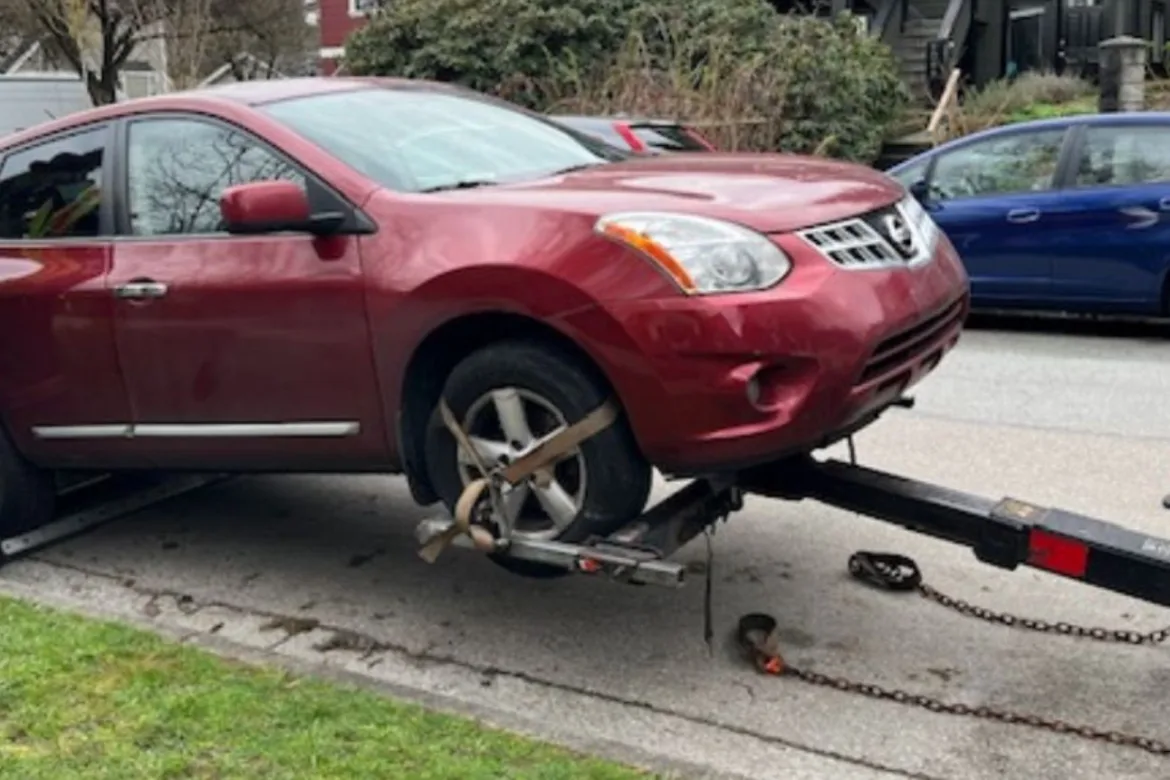
- Free towing. The car doesn’t need to run. Our driver comes to you with a tow truck and checks the car against the photos and description.
- Paid on pickup. You’re paid cash or by e-transfer when the car is picked up, and we handle the ICBC transfer paperwork on-site.
- Bring your ID and proof of ownership — registration, bill of sale, or insurance papers. Missing something? Call us first and we’ll tell you what works.
The engine is only one part of what an old car is worth to us. We dismantle cars and sell the usable parts, so we look at the whole vehicle. Our post on how a junk car’s value is calculated explains what goes into an offer.
Common Questions
Can I keep driving a car with a knocking engine?
For a light ping, a short careful drive to a mechanic is usually fine. For a deep knock, or any knock with the oil pressure light on, it’s safer to stop and have the car towed. Driving on a failing bearing is how a repairable engine becomes a destroyed one.
Will thicker oil or an additive fix rod knock?
It may quiet the noise for a while, but it won’t repair a worn bearing. The underlying damage keeps getting worse.
Is a seized engine always the end of the car?
Not always. Sometimes what looks like a seized engine turns out to be a starter or electrical problem, so it’s worth having it checked. A genuinely seized engine needs a rebuild or replacement, and on an older car that often costs more than the car is worth.
Do you take cars that don’t run at all?
Yes. Non-running cars are a normal part of what we do. See cash for a car that won’t start for how that works.
Related Reading
- Why Is My Car Overheating?
- Is It Worth Fixing a Blown Head Gasket?
- Car Leaking Fluid? What Each Color Means
- Mechanic Says It’s Not Worth Fixing — Now What?
If your engine has started knocking or has stopped turning over altogether, call or request a quote from Vancouver Scrap Car, or check our FAQ for anything else you’re wondering about.